Børge Mogensen
Design for the People
The Danish cabinetmaker and architect Børge Mogensen is considered one of the most influential Danish designers.
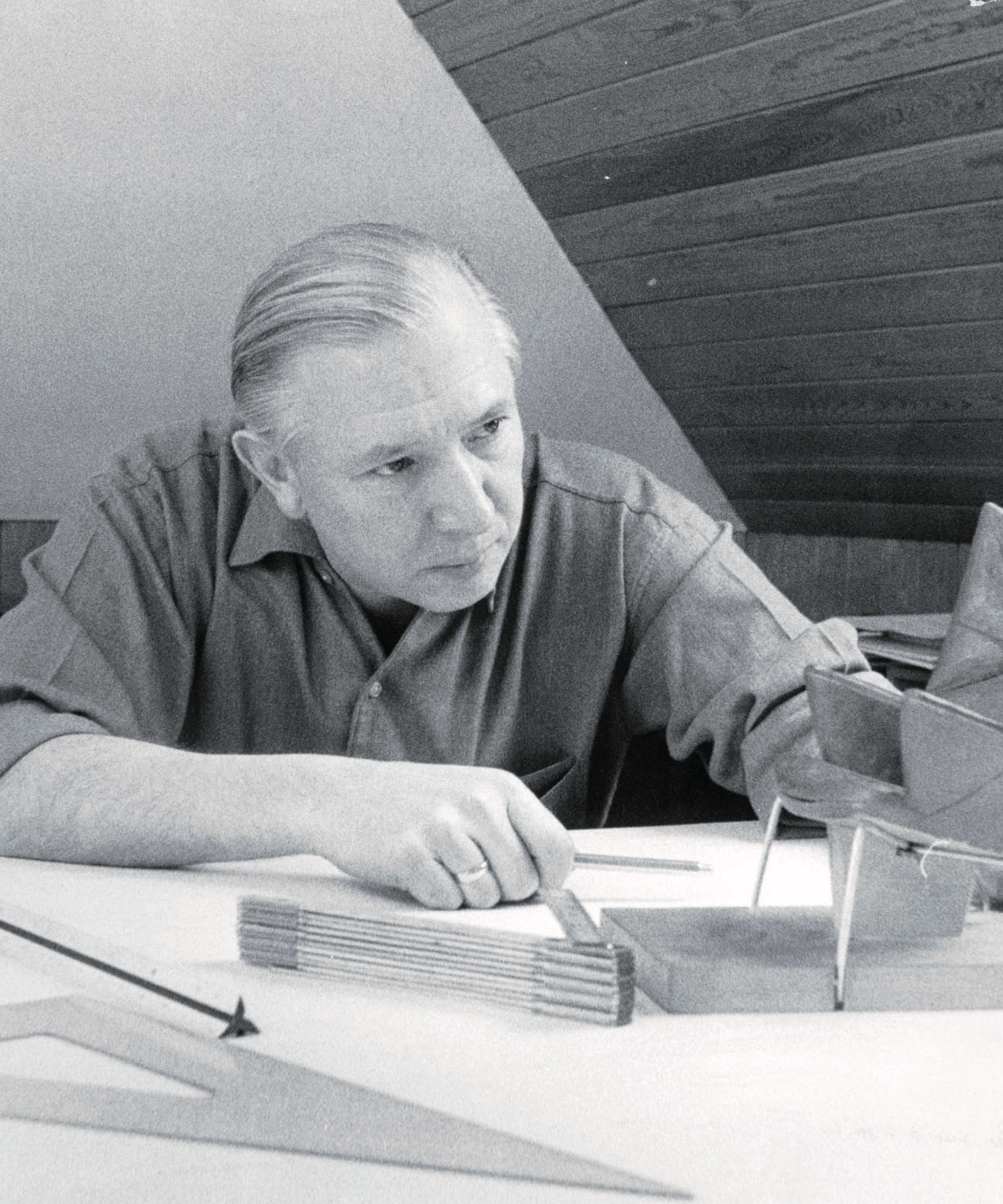
With a mission to make quality furniture accessible to everyone, Børge Mogensen (1914-1972) became known as “the people’s designer.” His life’s work was dedicated to creating simple and functional wooden furniture that could last for generations. During his relatively short life, Børge Mogensen established himself as a prominent furniture designer. He was highly productive, designing a vast array of furniture and home textiles over 35 years—many of which have since achieved classic status.
As a cabinetmaker and architect, Børge Mogensen had a unique ability to put people at the center of his designs, adapting furniture to human needs rather than the other way around. He became one of the most influential architects and a key figure among the designers who shaped the concept of Danish Modern. His ambition to design simple and functional wooden furniture for both private and public spaces was—and remains—closely aligned with Danish design philosophy and the concept of democratic design.


In 1934, Børge Mogensen completed his training as a cabinetmaker before studying furniture architecture at the School of Arts and Crafts (1936-1938) and the Royal Danish Academy of Fine Arts’ School of Furniture (1938-1942). During this period, he worked at the studios of Kaare Klint and Mogens Koch until 1942, when he became the head and chief designer of FDB’s furniture design studio. There, he championed the concept of democratic design, setting a new direction for designing and producing furniture suited to modern living, with a focus on functionality and quality. This mission continued until 1950, when he established his own design studio.
As a student of Kaare Klint—one of the most influential designers of the time—Børge Mogensen embraced Klint’s philosophy of focusing only on the essentials and prioritizing human proportions. Both Klint and Mogensen understood that good furniture should convey visual calm and sober functionalism. However, unlike his mentor, Børge Mogensen’s primary mission was to develop furniture that suited a more informal interior culture and was adapted to modern production methods.
Alongside his work as a designer, Børge Mogensen also taught at the Royal Danish Academy of Fine Arts’ School of Furniture from 1945-1947 and participated in the annual exhibitions of the Cabinetmakers’ Guild. In 1948, he took part in the international “Low Cost Furniture” competition at MoMA in New York alongside his friend Hans J. Wegner. In 1961, he held a solo exhibition in London.
Børge Mogensen left a lasting impact on Danish design history and received several design awards and recognitions for his work. In 1950, he was awarded the Eckersberg Medal, and in 1971, he received the Danish Furniture Prize. In 1972, shortly before his death, he was awarded the C.F. Hansen Medal and was named Honorary Royal Designer for Industry by the Royal Society of Arts in London.
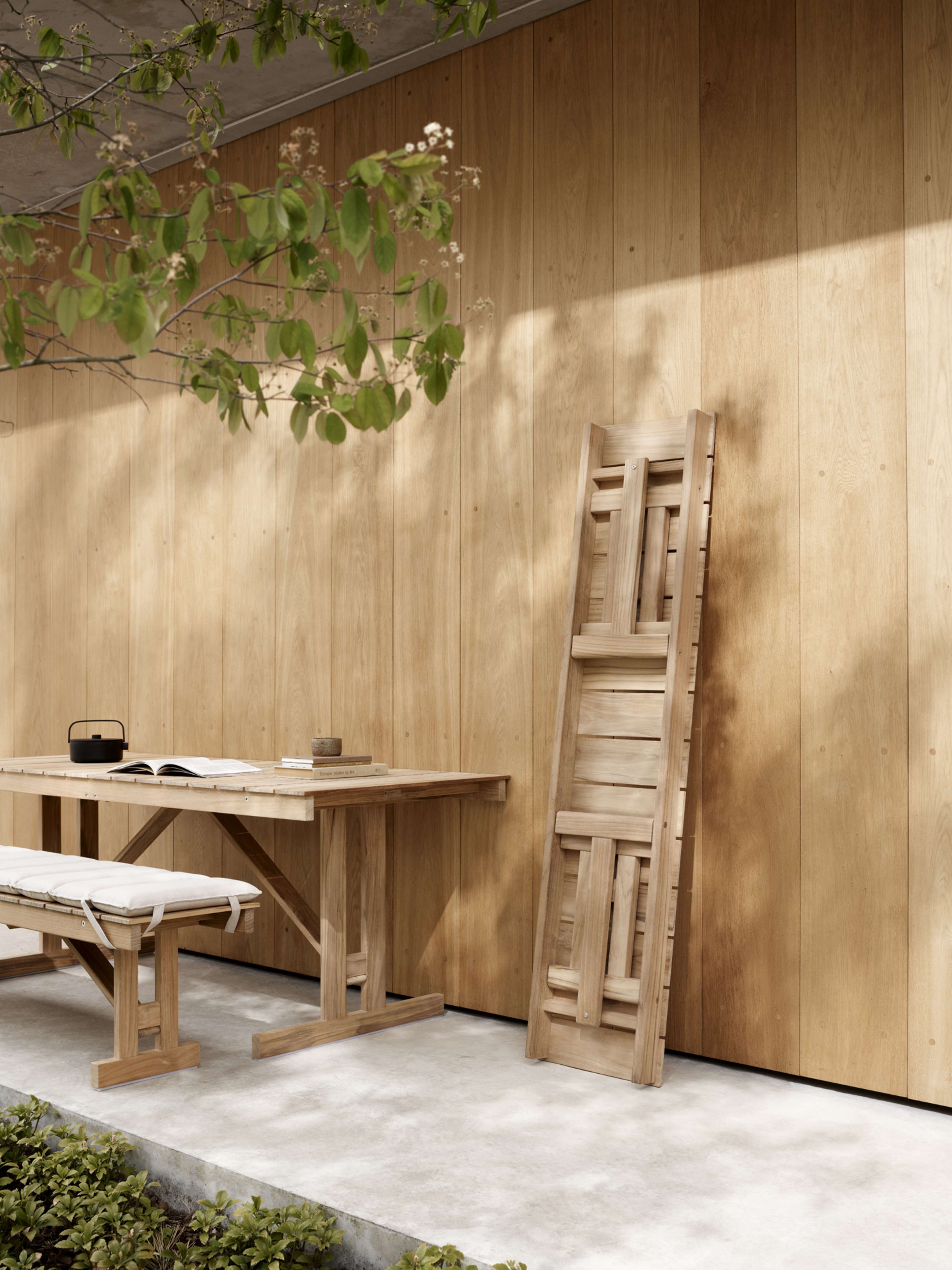
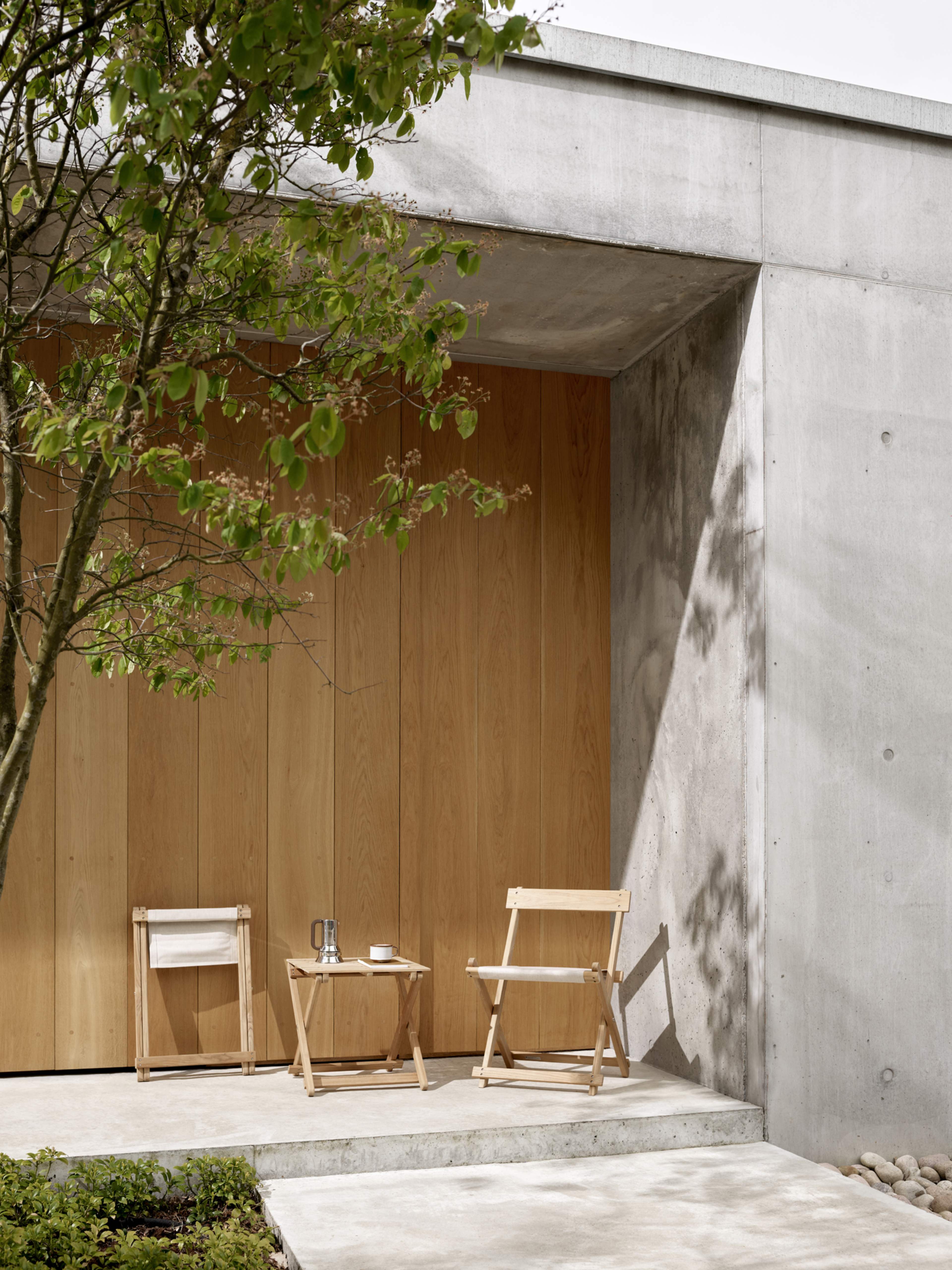
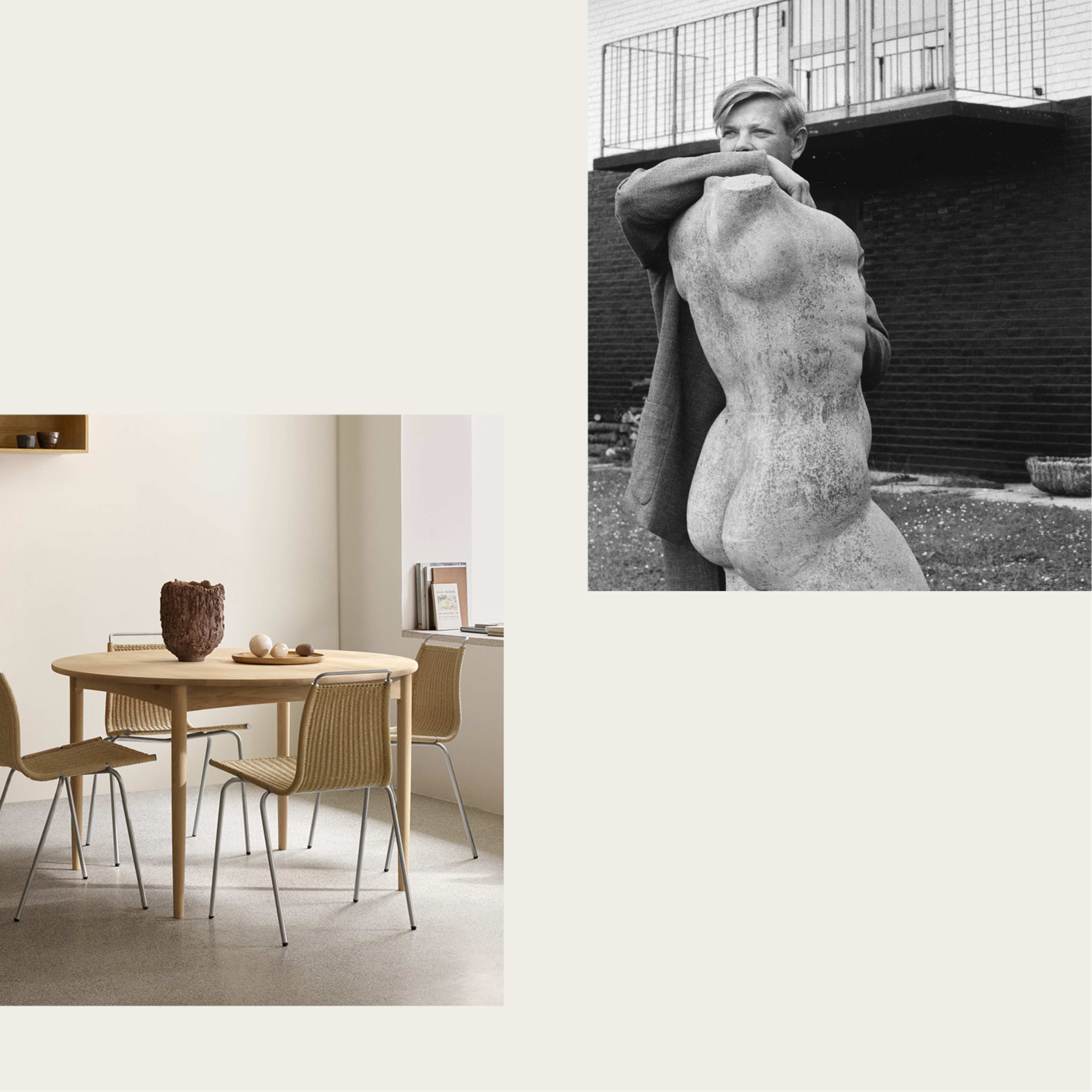
Børge Mogensen’s design language is characterized by simplicity. He eliminated all unnecessary elements, working within the most basic frameworks. Often favoring wood as his primary material, he created furniture with strong constructions and high-quality materials, designed to withstand everyday life. While he developed a distinctive visual simplicity, he also drew inspiration from various cultures and styles, including international modernism, Japanese woodcuts, and historical furniture such as the simple American Shaker pieces.
“My goal is to create things that serve people—to place people at the center rather than forcibly adapting them to objects,”
Børge Mogensen said about his approach to design.
Our designers
Hans J. Wegner
Danish furniture designer Hans J. Wegner (1914-2007) is considered one of the most creative, innovative, and prolific designers of all times, renowned for his precision, great insight into craftsmanship and uncompromising approach to design.
Anker Bak
Designer and cabinetmaker Anker Bak (b. 1983) is known for his problem-solving and human-centric design approach.
Arne Jacobsen
As one of Denmark's most famous and renowned architects, Arne Jacobsen (1902-1971) is synonymous with modernism both in Denmark and abroad, where his stringent and expressive style became characteristic of his architectural and design work as a whole.
Bodil Kjær
Danish professor and architect Bodil Kjær has significantly contributed to the spread of Danish Modern design principles through her travels, knowledge gathering and promotion of the relationship between design and architecture.
Bonderup & Thorup
Claus Bonderup (1943–2022) and Torsten Thorup (b.1944) are regarded as some of the most prolific post-modern designers, leaving their mark on everything from architecture and international design projects to industrial design.
Brad Ascalon
Brad Ascalon is an American designer born in 1977. He entered the art and design world at a young age. His grandfather, a sculptor and industrial designer, and his father, a renowned artist, encouraged a passion for design, craftsmanship and materials that would last.
EOOS
The design studio EOOS, founded by Martin Bergmann (b. 1963), Gernot Bohmann (b. 1968) and Harald Gründl (b. 1967), enjoys a reputation for its poetic approach to design.
Frits Henningsen
Frits Henningsen was an uncompromising designer known for his perfectionism and vibrant personality. He gave new expression to traditional designs and viewed quality craftsmanship as essential. Unlike most cabinetmakers, he always designed his own furniture pieces.
Kaare Klint
Architect Kaare Klint (1888–1954) was a beacon of Danish design and, with his unique understanding of proportions, he laid the groundwork for the Danish Modern concept.
Larsen & Bender Madsen
Ejner Larsen and Aksel Bender Madsen designed around 300 works, including the Metropolitan Chair. While the chair was their favorite object, they also made other pieces from bedroom suites to bookshelves. The results were always simple and timeless.
Linie Design
Linie Design, a Danish design company, was founded in 1980 and since then has specialized in the development of handmade rugs in elegant designs and of the highest quality materials.
Mads Odgård
The Danish industrial designer Mads Odgård (b. 1960) is known for his minimalist design approach with straight lines, geometric shapes and rationalism.
Mogens Lassen
Architect Mogens Lassen created works rooted in cubist architectural ideals inspired by Le Corbusier. Considered a pioneer of functionalism in Denmark, Lassen’s designs showcased his ability to express ideas through diverse materials.
Morten Gøttler
Morten Gøttler (b.1944) is a Danish designer with a unique appreciation of materials, form and functionality.
Nanna Ditzel & Jørgen Ditzel
Her desire to explore spaces and experiment with techniques on the edge of what is possible led Nanna Ditzel – one of Danish design’s most distinctive personalities – to become acquainted with the entire design universe.
Ole Wanscher
Ole Wanscher was integral to the aesthetic and functionality of modern Danish design. Having studied under Kaare Klint, he helped shape Danish furniture design as a designer and as an educator when he took over Klint’s professorship at the Royal Danish Academy of Fine Arts.
Poul Kjærholm
Poul Kjærholm (1929–1980) was an influential Danish designer known for his functionalist, uncompromising approach, his use of innovative materials and his international outlook rooted in the Danish craftmanship tradition.
Fabricius & Kastholm
Function and minimalism were the watchwords for Danish designers Preben Fabricius (1931–1984) and Jørgen Kastholm (1931–2007), when this design duo created a wide collection of design-led furniture and lighting of international renown.
Rikke Frost
Rikke Frost (b.1973) is recognised for her profound knowledge of materials and for how she combines different craft traditions. This is clearly reflected in her portfolio of designs, where contemporary and traditional design axioms and materials converge in organically styled furniture and lighting.
Strand & Hvass
The Strand + Hvass duo is part of a new breed of Danish designers whose work continues in a direct line from their celebrated predecessors. With the Extend Table design, they infused the modern Danish furniture tradition with a bold new expression.
Tadao Ando
Japanese architect Tadao Ando bases his work on a design philosophy that unites Japanese design traditions with modern Western expression. Inspired by Le Corbusier, Ando’s style is minimalistic and innovative, with a focus on functionality.
Thomas Bo Kastholm
Thomas Bo Kastholm creates designs that unite diverse materials into compelling compositions with clear purpose. The TK8 Daybed, with its close ties to the core principles of classic, modern Danish design, exemplifies Kastholm’s ideals.