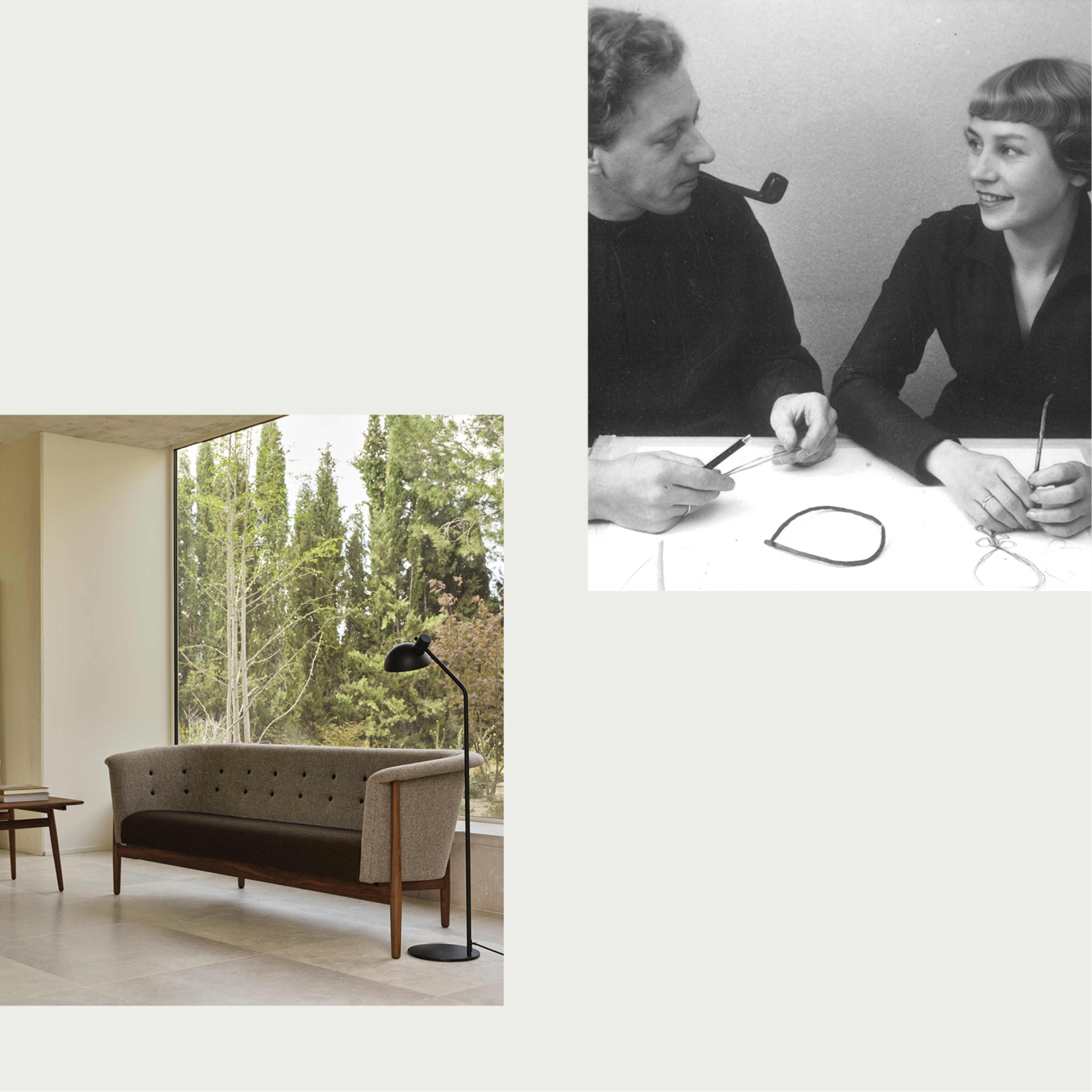
Nanna Ditzel & Jørgen Ditzel
One of Danish design’s most distinctive personalities.
Design in generous forms inspired by organic modernism.
Danish architect duo Nanna Ditzel (1923-2005) and Jørgen Ditzel (1921-1961) took an experimental and unconventional approach to design and, through their joint career, have left a significant mark on Danish design. Their innovative work aimed to rethink the functionalist design tradition and was honoured with major international awards. Growing up in Copenhagen, Nanna Ditzel (née Hauberg) always had a zeal for freedom and an urge to improve familiar everyday objects. This led her to train as a cabinetmaker – a very unusual career choice for a young woman in the 1940s – and later as a furniture architect at the Danish Design School and the Danish School of Architecture.
Nanna Ditzel and upholsterer Jørgen Ditzel studied under Kaare Klint, among others. Klint, now regarded as a pioneering reformer, took a radical approach to architecture and design by shifting away from traditional, style-driven teachings in favour of a more practical approach to architecture and furniture design. Later on, however, Nanna and Jørgen Ditzel broke away from the Klintian school of thought. Following their imagination, they created generous designs inspired by organic modernism, a philosophy that had flourished on the international design scene during the 1940s.
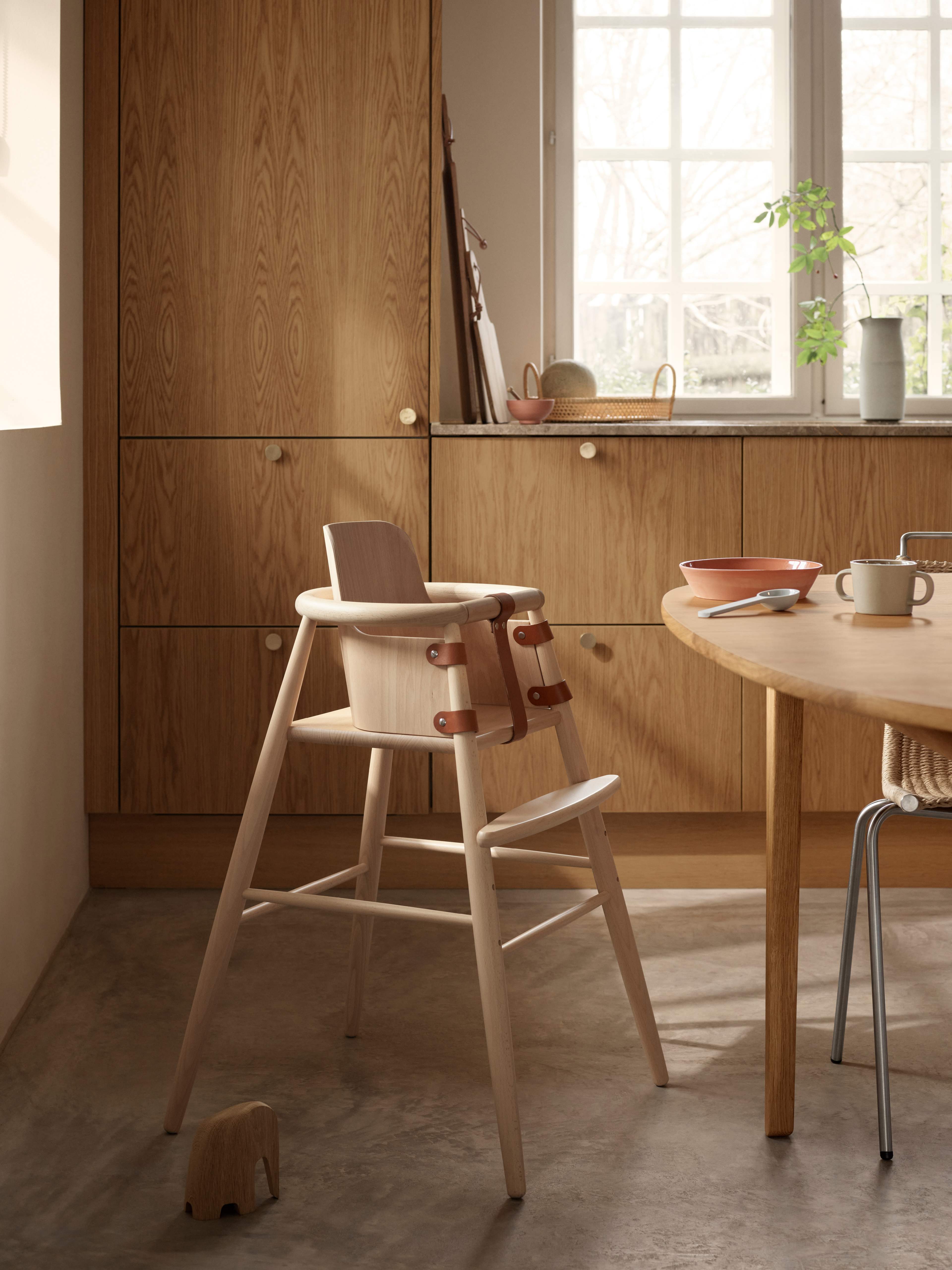
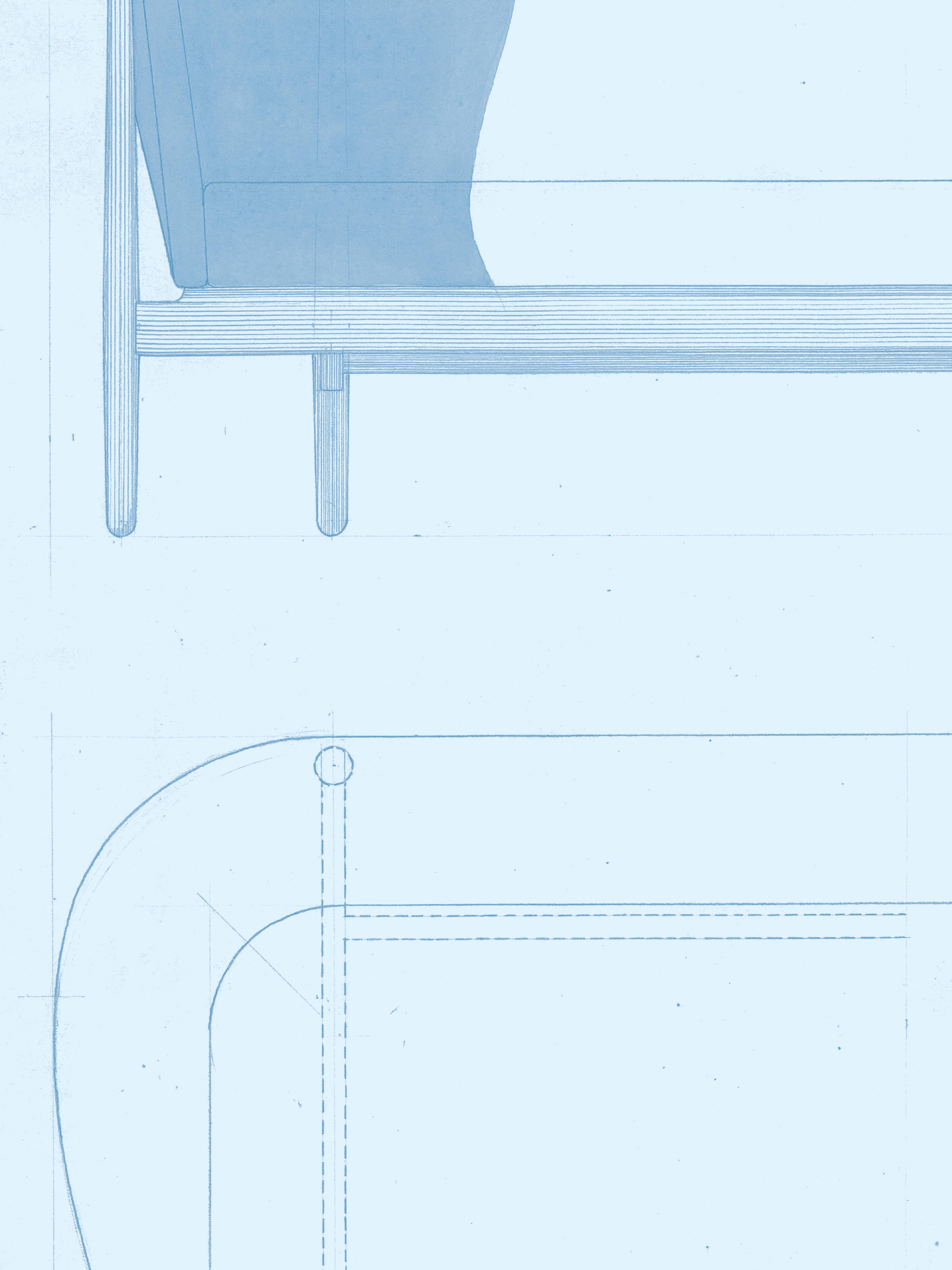
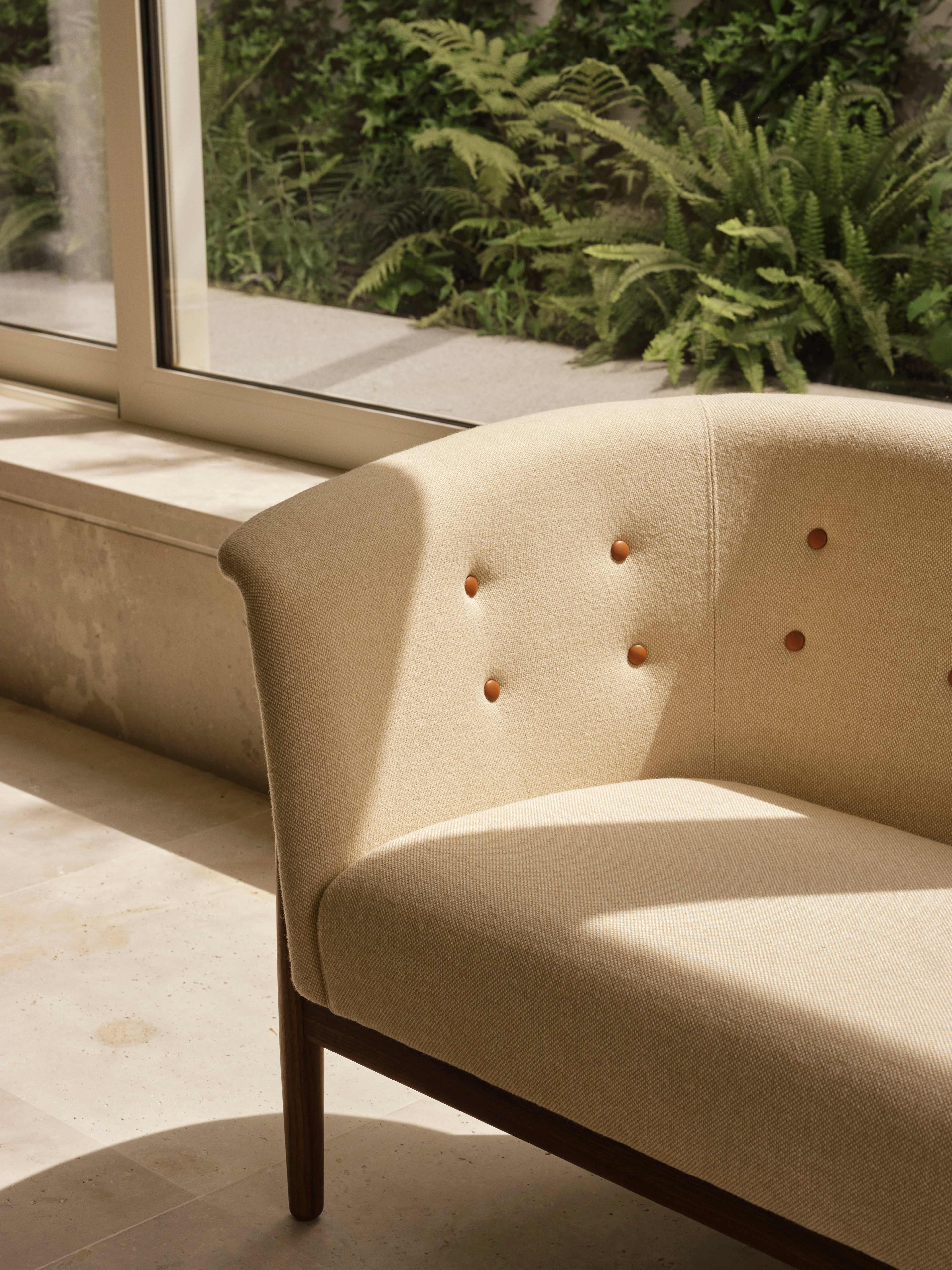
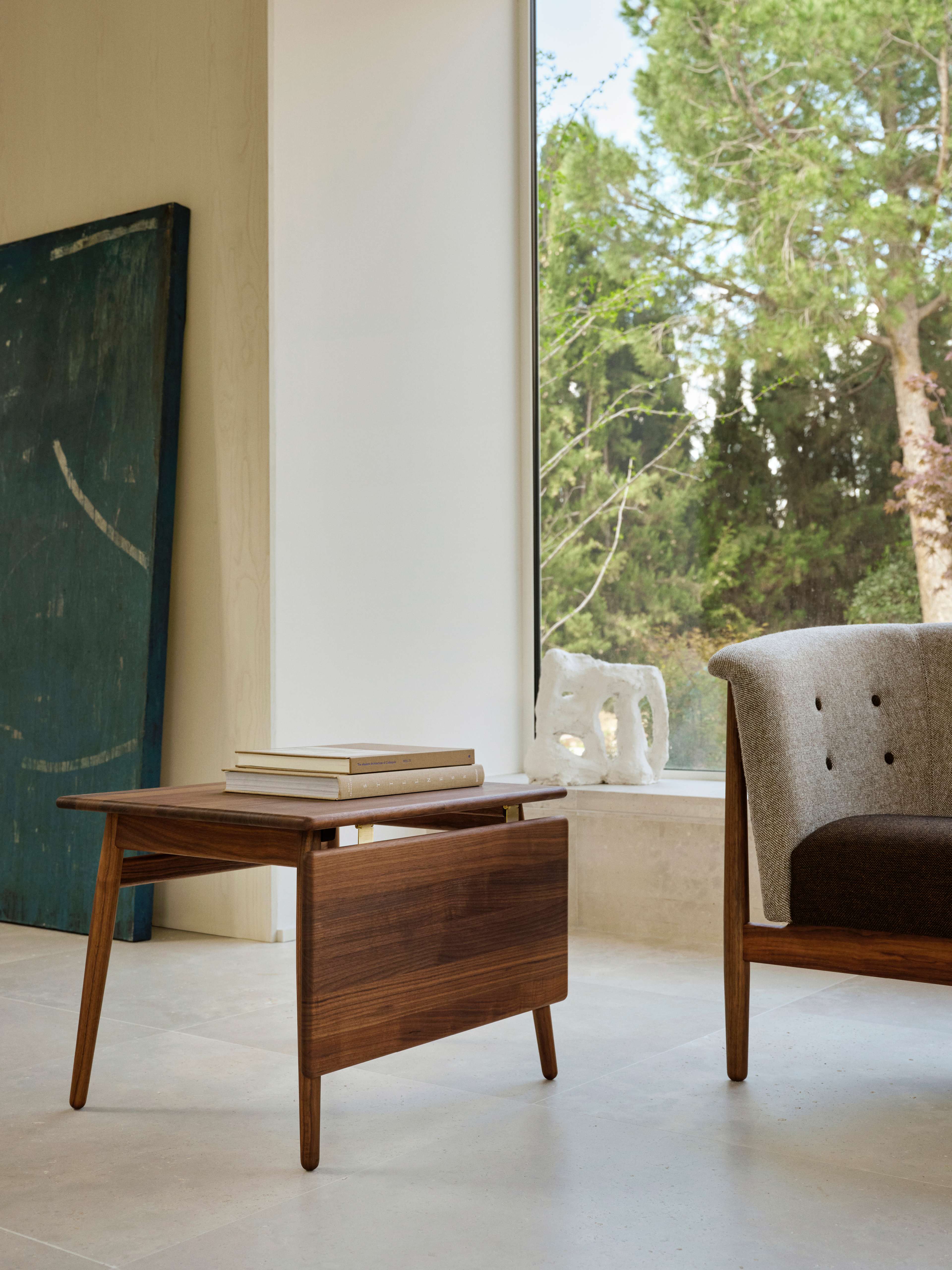
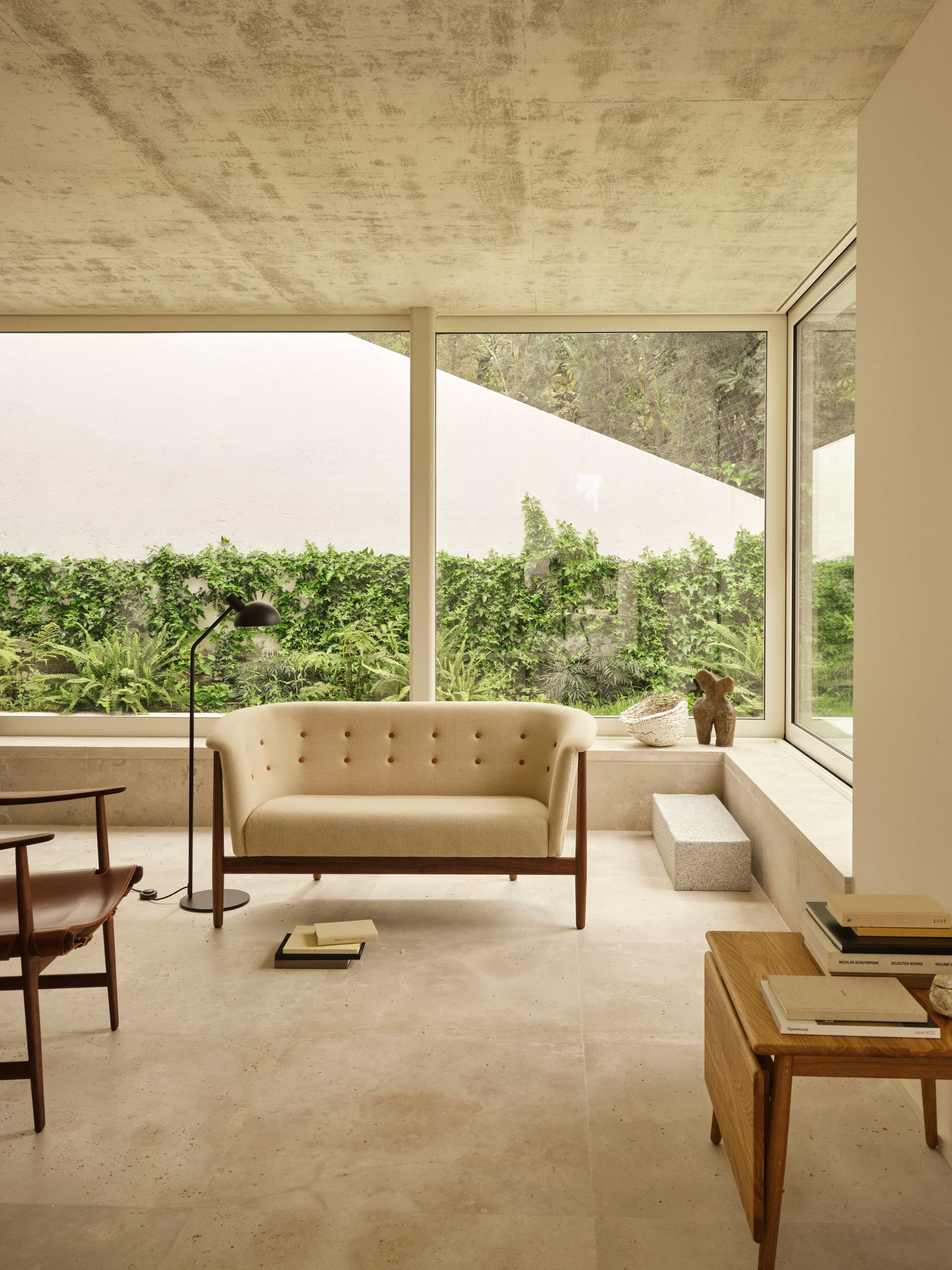
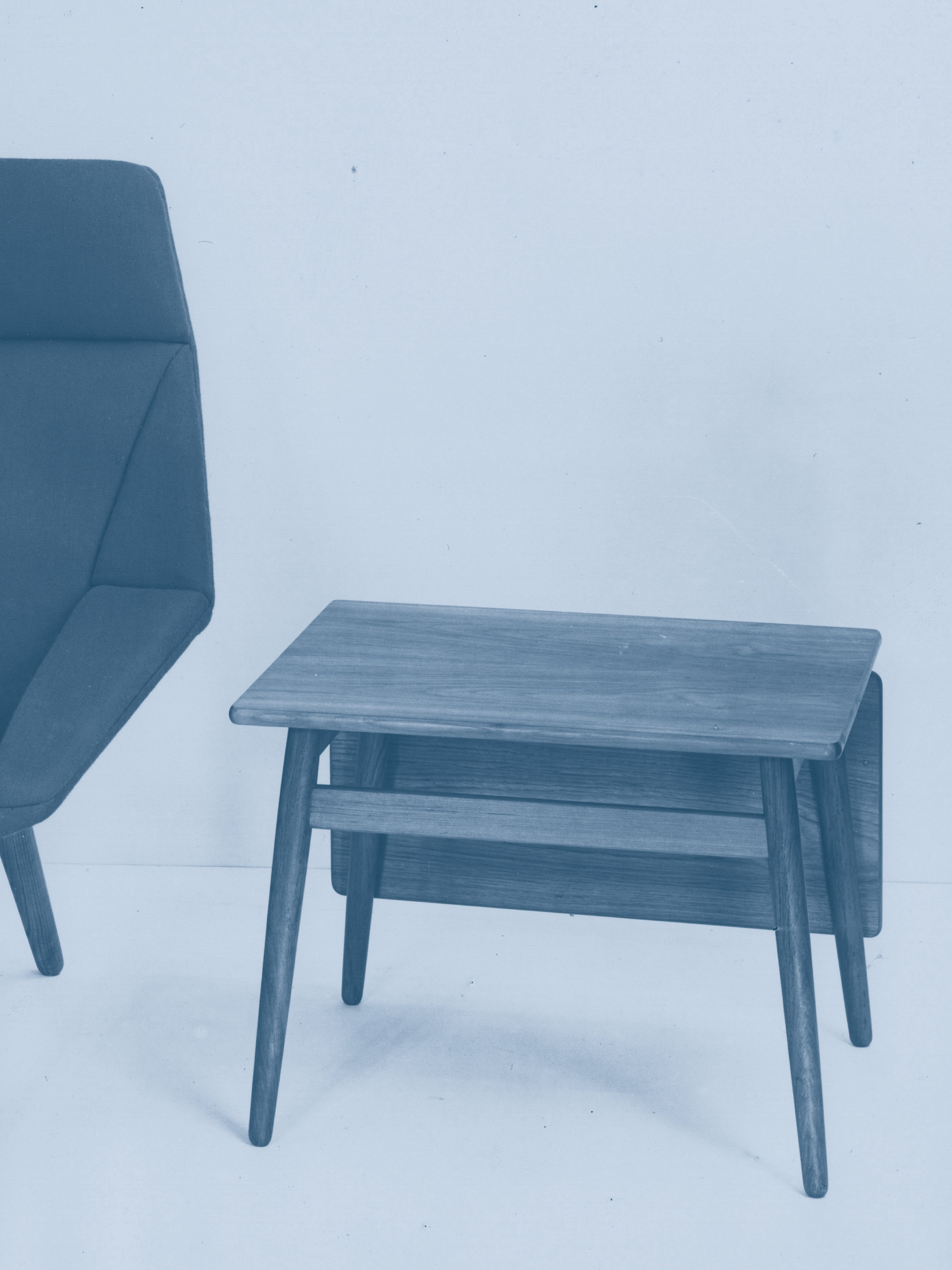
After graduating in 1946, the couple married and started a design studio together. The collaboration between Nanna and Jørgen Ditzel was enormously successful, and together they developed a range of furniture that broke with traditional design conventions. Combined with a spatial approach, they based their designs on the human body and did not shy away from challenging familiar materials and craft methods. In many ways, their designs and their endeavours to discover new forms and functions represented a kind of free play.
The couple aimed to develop furniture that supported a freer and richer life. Many of their furniture pieces were created to fit their own needs. One such piece was the legendary high chair, designed by Nanna and Jørgen Ditzel in 1954, which is now part of the Danish Culture Canon. During the 15 years they worked together, the couple received both silver and gold medals at the world famous Milan Triennal exhibition and the Lunning Prize. They were a key part of the avant-garde designers of the time who dared to embrace change and innovation and whose ideas resonated in an international context.
Jørgen Ditzel died after a short illness in 1961, aged just 39. His death left the young Nanna Ditzel with three small children to raise and the couple’s design studio to run. Nevertheless, during that time she managed to further refine her own expression and create a wide range of designs that are considered classics today.
Later on, Nanna Ditzel moved to London and, on returning to Copenhagen in 1987, she re-established a design studio in her own name. Nanna Ditzel went on to create a series of expressive designs that truly came to underscore her status as one of the great Danish designers, with a portfolio that includes furniture, utility items, jewelry and textiles. Nanna Ditzel worked and ran her studio until she passed away in 2005.
Our designers
Hans J. Wegner
Danish furniture designer Hans J. Wegner (1914-2007) is considered one of the most creative, innovative, and prolific designers of all times, renowned for his precision, great insight into craftsmanship and uncompromising approach to design.
Anker Bak
Designer and cabinetmaker Anker Bak (b. 1983) is known for his problem-solving and human-centric design approach.
Arne Jacobsen
As one of Denmark's most famous and renowned architects, Arne Jacobsen (1902-1971) is synonymous with modernism both in Denmark and abroad, where his stringent and expressive style became characteristic of his architectural and design work as a whole.
Bodil Kjær
Danish professor and architect Bodil Kjær has significantly contributed to the spread of Danish Modern design principles through her travels, knowledge gathering and promotion of the relationship between design and architecture.
Bonderup & Thorup
Claus Bonderup (1943–2022) and Torsten Thorup (b.1944) are regarded as some of the most prolific post-modern designers, leaving their mark on everything from architecture and international design projects to industrial design.
Brad Ascalon
Brad Ascalon is an American designer born in 1977. He entered the art and design world at a young age. His grandfather, a sculptor and industrial designer, and his father, a renowned artist, encouraged a passion for design, craftsmanship and materials that would last.
Børge Mogensen
Cabinetmaker and designer Børge Mogensen (1914-1972) created durable and simple furniture with a focus on people and is today regarded as one of the most influential representatives of Danish Modern.
EOOS
The design studio EOOS, founded by Martin Bergmann (b. 1963), Gernot Bohmann (b. 1968) and Harald Gründl (b. 1967), enjoys a reputation for its poetic approach to design.
Frits Henningsen
Frits Henningsen was an uncompromising designer known for his perfectionism and vibrant personality. He gave new expression to traditional designs and viewed quality craftsmanship as essential. Unlike most cabinetmakers, he always designed his own furniture pieces.
Kaare Klint
Architect Kaare Klint (1888–1954) was a beacon of Danish design and, with his unique understanding of proportions, he laid the groundwork for the Danish Modern concept.
Larsen & Bender Madsen
Ejner Larsen and Aksel Bender Madsen designed around 300 works, including the Metropolitan Chair. While the chair was their favorite object, they also made other pieces from bedroom suites to bookshelves. The results were always simple and timeless.
Linie Design
Linie Design, a Danish design company, was founded in 1980 and since then has specialized in the development of handmade rugs in elegant designs and of the highest quality materials.
Mads Odgård
The Danish industrial designer Mads Odgård (b. 1960) is known for his minimalist design approach with straight lines, geometric shapes and rationalism.
Mogens Lassen
Architect Mogens Lassen created works rooted in cubist architectural ideals inspired by Le Corbusier. Considered a pioneer of functionalism in Denmark, Lassen’s designs showcased his ability to express ideas through diverse materials.
Morten Gøttler
Morten Gøttler (b.1944) is a Danish designer with a unique appreciation of materials, form and functionality.
Ole Wanscher
Ole Wanscher was integral to the aesthetic and functionality of modern Danish design. Having studied under Kaare Klint, he helped shape Danish furniture design as a designer and as an educator when he took over Klint’s professorship at the Royal Danish Academy of Fine Arts.
Poul Kjærholm
Poul Kjærholm (1929–1980) was an influential Danish designer known for his functionalist, uncompromising approach, his use of innovative materials and his international outlook rooted in the Danish craftmanship tradition.
Fabricius & Kastholm
Function and minimalism were the watchwords for Danish designers Preben Fabricius (1931–1984) and Jørgen Kastholm (1931–2007), when this design duo created a wide collection of design-led furniture and lighting of international renown.
Rikke Frost
Rikke Frost (b.1973) is recognised for her profound knowledge of materials and for how she combines different craft traditions. This is clearly reflected in her portfolio of designs, where contemporary and traditional design axioms and materials converge in organically styled furniture and lighting.
Strand & Hvass
The Strand + Hvass duo is part of a new breed of Danish designers whose work continues in a direct line from their celebrated predecessors. With the Extend Table design, they infused the modern Danish furniture tradition with a bold new expression.
Tadao Ando
Japanese architect Tadao Ando bases his work on a design philosophy that unites Japanese design traditions with modern Western expression. Inspired by Le Corbusier, Ando’s style is minimalistic and innovative, with a focus on functionality.
Thomas Bo Kastholm
Thomas Bo Kastholm creates designs that unite diverse materials into compelling compositions with clear purpose. The TK8 Daybed, with its close ties to the core principles of classic, modern Danish design, exemplifies Kastholm’s ideals.










Danish design
Authentic experience
Up to a five-year warranty*
When you choose a product from Carl Hansen & Søn, you get more than just a piece of furniture. You will become part of a long and proud tradition of beautiful and distinctive craftsmanship where nothing is left to chance. We are the world’s largest manufacturer of furniture designed by Hans J. Wegner, and we also produce furniture created by renowned furniture designers such as Arne Jacobsen, Børge Mogensen, Ole Wanscher, Kaare Klint, Poul Kjærholm, Bodil Kjær and Tadao Ando. Carl Hansen & Søn represents more than 100 years of Danish design history, and our furniture is sold worldwide.
* Five-year warranty on indoor furniture. Two-year warranty on outdoor furniture