DanskLogin


Cooperation with Hans J. Wegner

The collaboration between Hans J. Wegner and Carl Hansen & Son began in 1949.

Managing director Holger Hansen was on the lookout for new designs to supplement the heavier furniture that was then popular. His sales representative, Ejvind Kold Kristensen, was himself a skilled craftsman who kept a close eye on the Danish furniture design scene. The years immediately after the war were a time of renewal that allowed a number of younger architects to spread their wings, and one of the architects that caught Kold Kristensen’s eye was Hans J. Wegner.

Despite outstanding and pioneering work, Wegner’s career had yet to take off in 1949. He had worked for Arne Jacobsen and Erik Møller before the war, designing furniture for Aarhus City Hall and Nyborg Public Library. Wegner also designed for several companies during the war, and he introduced groundbreaking designs (e.g., The Peacock Chair, The Round Chair and The Large Shell Chair) for Johannes Hansen at the annual exhibitions arranged by the Cabinetmakers’ Guild in Copenhagen.

Kold Kristensen was convinced that Wegner’s designs would prove popular with a wider audience than those who attended the relatively small exhibitions – and that cooperation with a producer capable of larger series was necessary. The concept of design furniture made accessible through rational series production fit well with Wegner’s democratic ideals. A meeting between Wegner and Carl Hansen & Son was arranged, and cooperation began shortly thereafter.

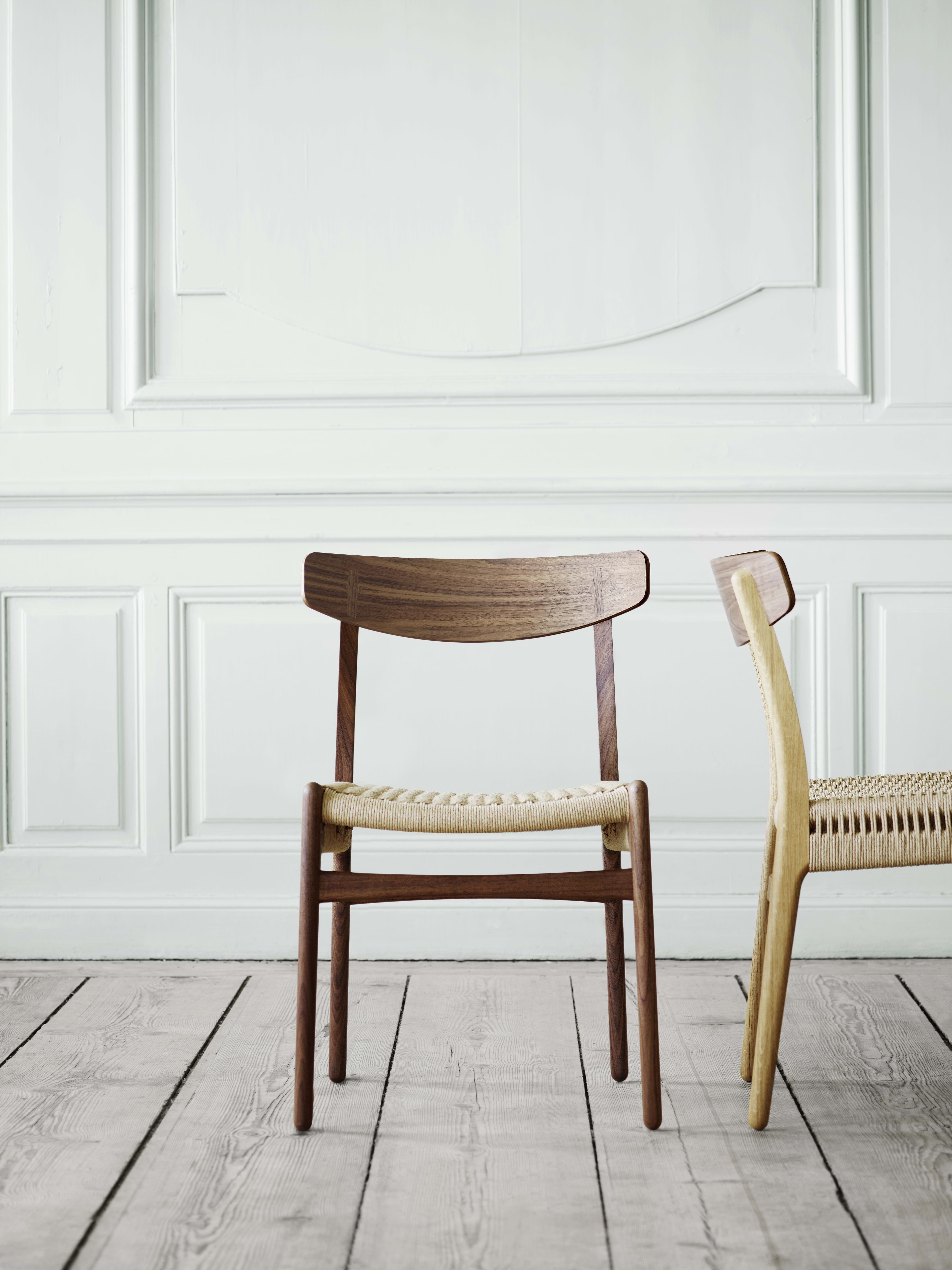
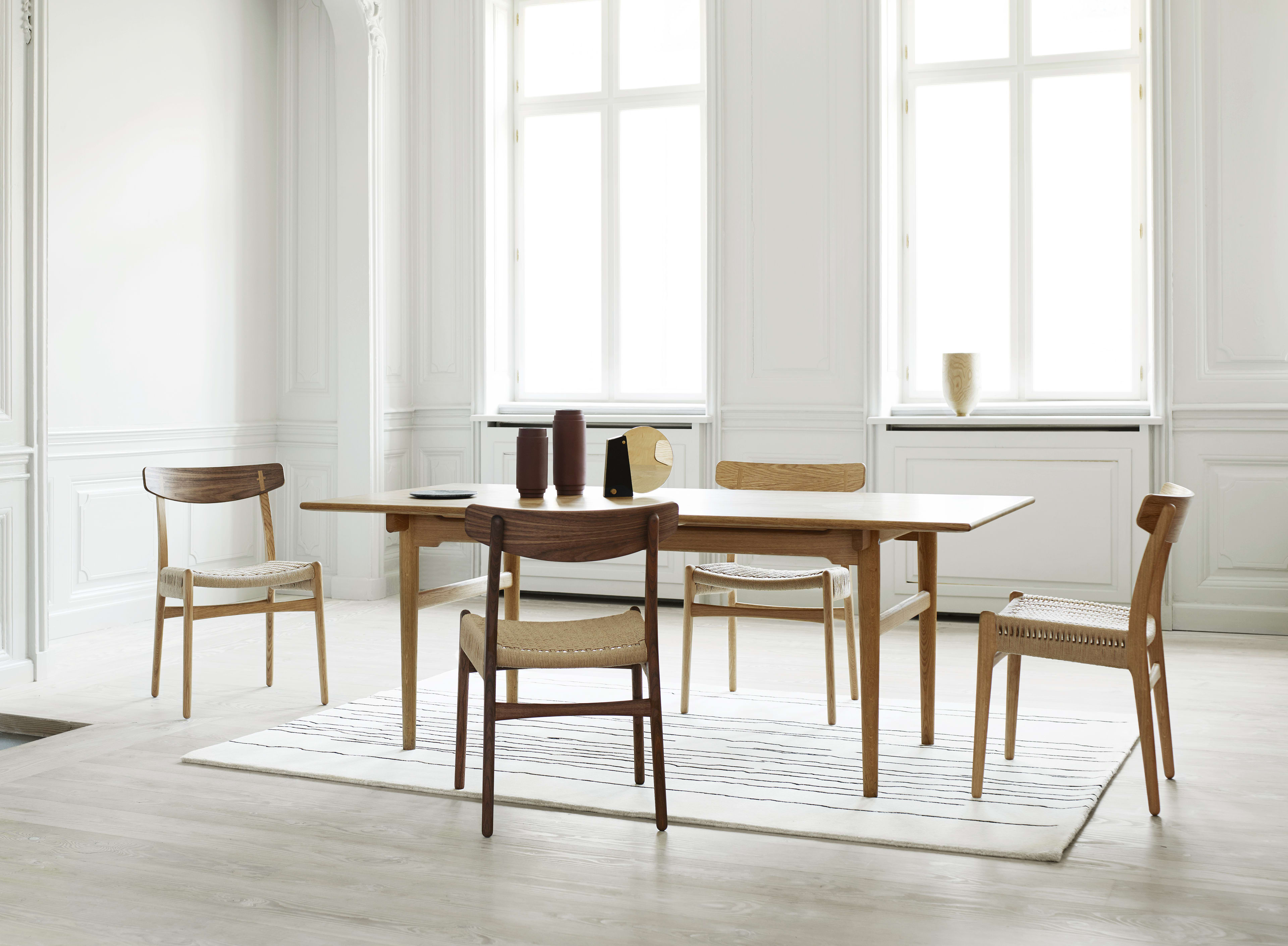
Wegner designed four chairs (CH22, CH23, CH24 and CH25) and a sideboard (CH304) for Carl Hansen and Son in 1949. The architect moved in with the Hansen family for three weeks to prepare for production, working closely with Holger Hansen and his master craftsmen.

Wegner’s first pieces for series production at Carl Hansen & Son were anything but easy to make. With their distinctive, sculptural forms, CH24 (The Wishbone Chair) and CH25 (The Paddle Chair), were the most ambitious designs.

The Wishbone Chair was particularly challenging. Its back rail was steam bent, its rear legs required turning by a sub-supplier and its construction demanded perfect craftsmanship. Until then, chair seats were woven with reed, but CH24 and CH25 made use of paper cord for the first time. Paper cord was developed for use in grain binders in Sweden during the war as a substitute for jute; it proved to be exceptionally suitable for furniture use.

Dedicating a large part of production capacity on unproven designs was a major gamble for Holger Hansen, and the new furniture was not an immediate hit. Within a few years, however, Wegner’s designs began to capture the interest of more and Danish and foreign consumers.